RECIPES • SOURDOUGH
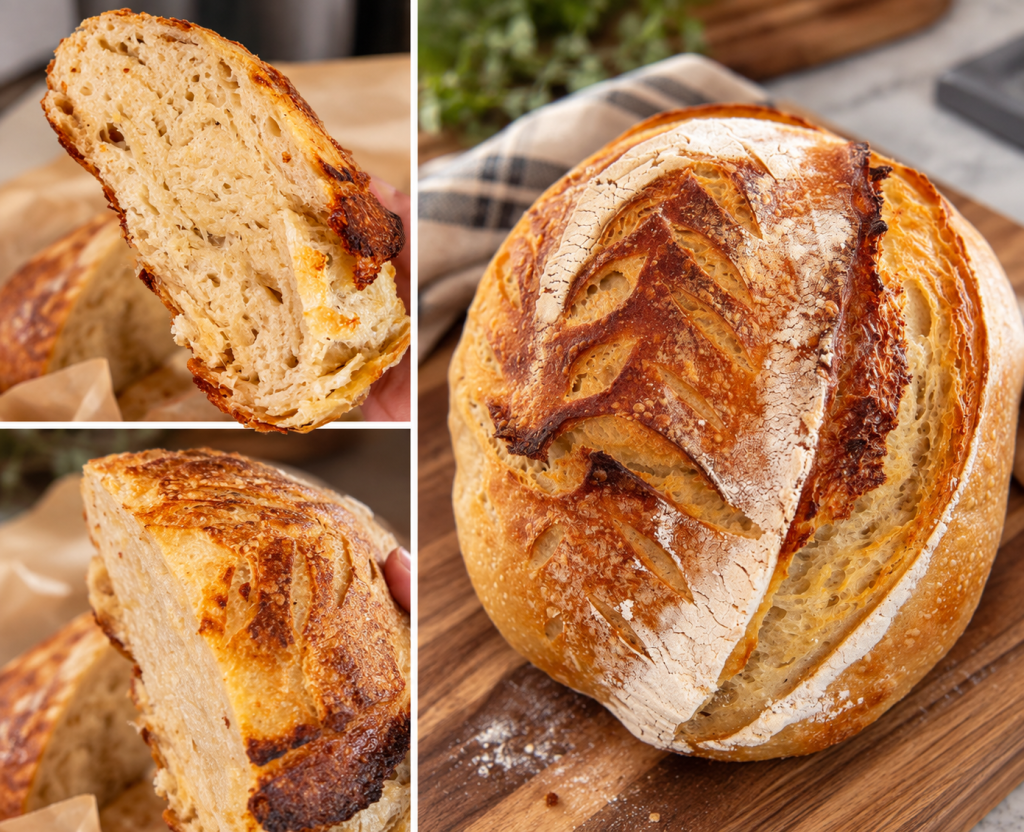
A buttery, flaky sourdough loaf filled with little layers of cold butter — started in the morning, cold-proofed overnight and baked fresh the next day.
This buttery sourdough croissant bread combines two things I love: a naturally fermented sourdough loaf and the rich, buttery layers of a croissant.
Instead of making traditional laminated croissant dough, cold grated butter is gently folded into the sourdough during the stretch-and-fold process. The little pieces of butter stay visible throughout the dough and create a rich, tender and beautifully buttery loaf when baked.
This version uses a simple 1:1:1 levain and a morning-to-morning schedule. Start the levain in the morning, mix and ferment the dough during the day, refrigerate overnight and bake the next morning.
🌿 Little Z’s Baking Note
The secret to this loaf is keeping the butter cold. You want to see little pieces and streaks of butter in the dough rather than letting it completely melt into the dough.
WHAT YOU’LL NEED
Ingredients
Levain — 1:1:1
- 60 g active sourdough starter
- 60 g water
- 60 g bread flour
Total: 180 g levain
Use: 120 g ripe levain for the dough
Dough
- 120 g ripe levain
- 340 g water
- 500 g bread flour
- 10 g salt
- 113 g (½ cup / 1 stick) unsalted butter, very cold
DAY ONE
Mix & Ferment
7:00 AM
Make the Levain
Mix together:
- 60 g active sourdough starter
- 60 g water
- 60 g bread flour
Cover loosely and leave at room temperature.
With a 1:1:1 feeding, the levain may be ready in approximately 3–5 hours, depending on the strength of your starter and the temperature of your kitchen.
Your levain is ready when it is:
- Doubled or more in size
- Full of bubbles
- Puffy and airy
- Domed or just beginning to flatten on top
- Pleasantly fermented in aroma
11:00 AM–12:00 PM
Mix the Dough
In a large bowl, combine 120 g ripe levain and 340 g water.
Mix until the levain is mostly dispersed in the water.
Add 500 g bread flour and 10 g salt.
Mix thoroughly until no dry flour remains. The dough will look somewhat sticky and shaggy.
Cover and rest for 30 minutes.
❄️ Keep the Dough Cool
Try to keep the dough around 70–72°F. Keeping the dough relatively cool helps the butter remain in little pieces and layers rather than melting completely into the dough.
Prepare the Butter
Keep the 113 g unsalted butter refrigerated until you’re ready to use it.
Using the large holes of a box grater, grate the cold butter.
If your kitchen is warm, return the grated butter to the refrigerator while the dough rests.
12:00 PM • FOLD #1
First Stretch & Fold
Take one side of the dough, gently stretch it upward and fold it over itself.
Turn the bowl and repeat on all four sides. Cover and rest for 30 minutes.
12:30 PM • FOLD #2
Add Half of the Butter
Take approximately half of the grated cold butter and gently spread it over the dough.
Perform another set of stretch and folds, folding the dough over the butter.
You don’t need to completely incorporate it. Small pieces and streaks of cold butter throughout the dough are exactly what you want.
Cover and rest for 30 minutes.
1:00 PM • FOLD #3
Add the Remaining Butter
Add the remaining grated butter and perform another set of stretch and folds.
Fold gently to distribute the butter without kneading it completely into the dough.
Cover and rest for 30 minutes.
1:30 PM • FOLD #4
Final Stretch & Fold
Perform one final set of stretch and folds.
By now the dough should feel stronger, smoother, stretchy and slightly puffy. You may still see pieces of butter throughout the dough — that’s exactly what we want.
2:00 PM ONWARD
Bulk Fermentation
Cover the dough and allow it to continue fermenting. Aim to keep the dough around 70–72°F.
Because this dough contains a full stick of butter, fermentation may take quite a while. Instead of relying on an exact finishing time, watch the dough.
Bulk fermentation is finished when:
- Dough has increased approximately 60–70%
- The surface looks slightly domed
- You can see bubbles around the sides
- The dough feels noticeably airy
- It jiggles when you gently shake the bowl
Depending on your starter and room temperature, this may take approximately 6–8 hours after the final fold. Treat that as a guide rather than a deadline.
🌿 Watch the Butter, Too
If the dough approaches 75°F or warmer and the butter starts becoming very soft, place the dough in the refrigerator for about 15–30 minutes to cool it down. Then continue fermentation.
EVENING
Shape the Loaf
Once bulk fermentation is complete, gently turn the dough onto a lightly floured counter.
Try not to press out all of the air you’ve developed during fermentation.
Pre-Shape
Gently form the dough into a round and let it rest uncovered for 20–30 minutes.
Final Shape
Shape the dough into a tight boule or batard.
Place the shaped loaf seam-side up into a well-floured banneton and cover.
OVERNIGHT
Cold Proof
Place the shaped loaf directly into the refrigerator and cold proof for approximately 12–18 hours.
The overnight rest develops flavor while also keeping all those little butter layers cold before baking.
DAY TWO
Bake the Bread
Preheat the Dutch Oven
Place your Dutch oven inside the oven and preheat to 450°F.
Allow the Dutch oven to heat for at least 20–30 minutes.
Score
Remove the dough directly from the refrigerator and turn it onto parchment paper.
Score the loaf while it is still cold. A simple long slash works beautifully.
Carefully transfer the loaf into the hot Dutch oven.
Bake
Once the bread goes into the oven, reduce the temperature to 425°F.
Baking Time
25 minutes — covered
20 minutes — uncovered
Continue baking until the crust is deeply golden brown.
The center should reach approximately 195–200°F.
Because this loaf contains a generous amount of butter, you may notice some melted butter around the bread while it bakes. That’s normal.
THE HARDEST PART
Let It Cool
Transfer the bread to a cooling rack and let it cool for at least 1–2 hours before slicing.
The inside continues setting as the bread cools. Cutting it too early can leave the crumb gummy, so give it a little time before enjoying that first buttery slice.
EASY MORNING-TO-MORNING PLAN
🥐 Your Schedule at a Glance
7:00 AM — Make 1:1:1 levain
11:00 AM–12:00 PM — Levain peaks; mix dough
12:00 PM — Fold #1
12:30 PM — Fold #2 + half of the butter
1:00 PM — Fold #3 + remaining butter
1:30 PM — Fold #4
2:00 PM onward — Continue bulk fermentation
Evening — Shape when dough has risen approximately 60–70%
Overnight — Refrigerate for 12–18 hours
Next Morning — Score and bake
MOST IMPORTANT TIP
Watch your dough rather than strictly following the clock.
Your 1:1:1 levain can move quickly. The dough is ready for shaping when it looks noticeably airy, jiggly and bubbly and has risen approximately 60–70%.
And because this is croissant-inspired sourdough, keep the dough relatively cool so the butter stays in little pieces and layers instead of melting into the dough.
A Little Sourdough, A Little Croissant
Crisp and golden on the outside, soft and buttery inside — this is the kind of loaf that makes a slow morning at home feel a little more special.
Simple days. Creative moments. Little joys.
Little Z’s Corner


Leave a comment